

It’s hard to call it a “league” when only one team is really competing.
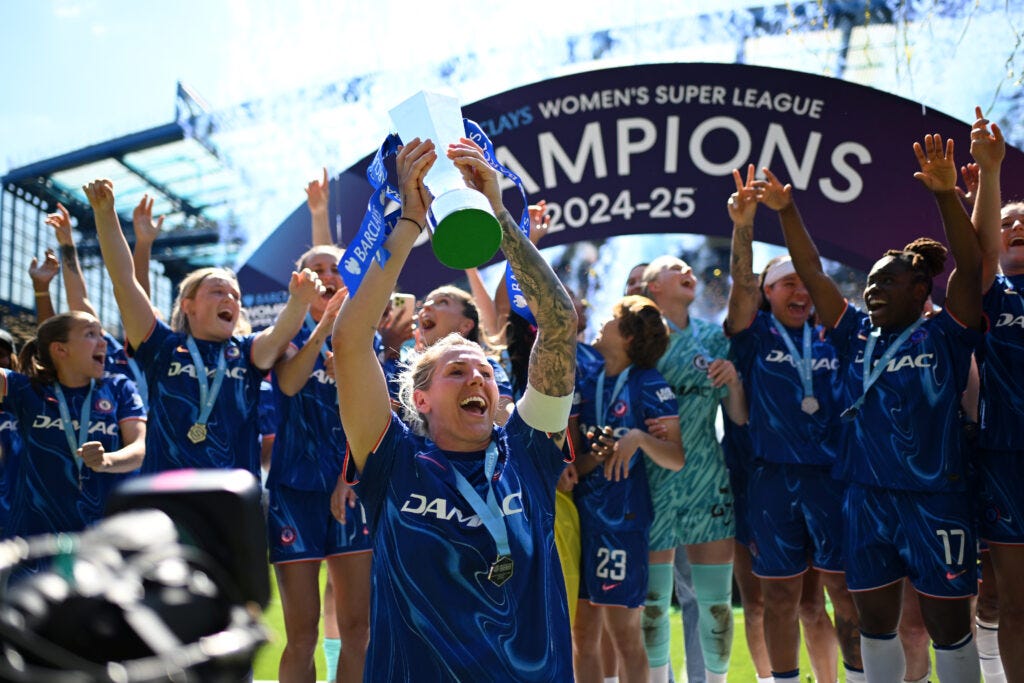
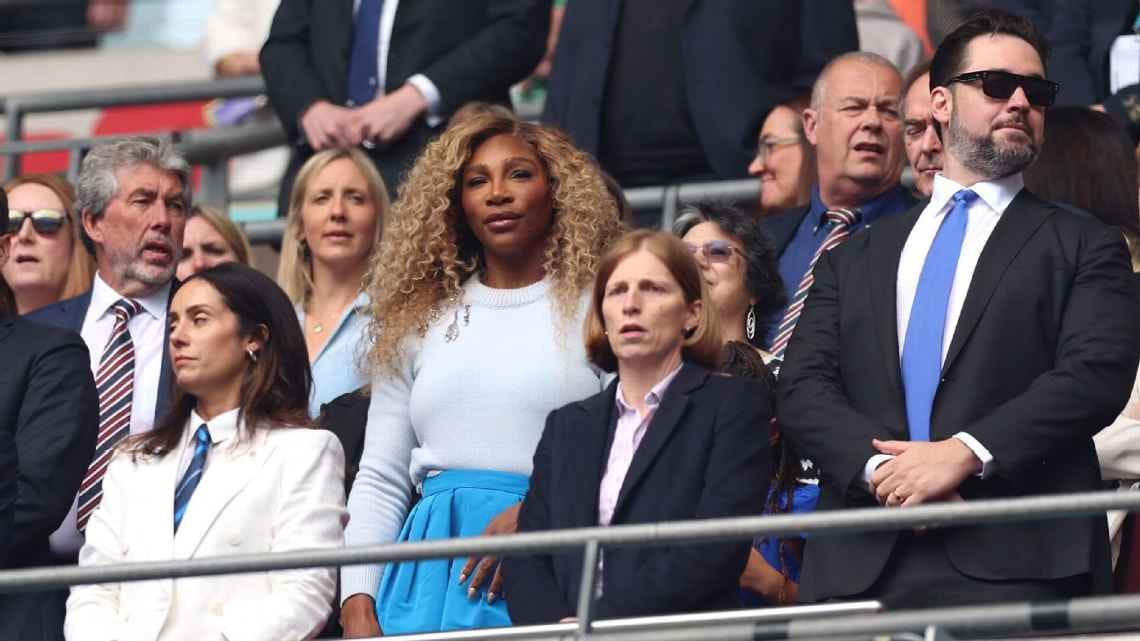
Chelsea have just won their sixth WSL title in a row, and their sixth FA Cup in ten years. They’ve shattered the world transfer record to bring in Naomi Girma from San Diego. And they’ve just landed £20 million in fresh investment from Alexis Ohanian, who, for the record, knows exactly how to build “billion-dollar” empires.
At this point, Chelsea aren’t defending a title. They’re building a dynasty. The only thing they haven’t won is the Champions League, and even that’s probably just a scheduling issue.
Meanwhile, at the other end of the table, clubs are still part-time in all but name. Coaches doubling up as logistics managers. Players supplementing wages with side hustles. Relegation scraps that feel like they’re happening in a different country, let alone the same league.
Even the others that make up the top four; Arsenal, City, United, aren’t close. Not really. There’s a performance gap, a financial gap, an everything gap. So what now?
A League of One (and Everyone Else)
The WSL was supposed to be a beacon of growth: competitive, professional, world-class. But when one club is operating like a tech startup with unlimited VC funding, and another can’t afford proper facilities, what you get is optics of parity, not the reality of it.
It’s easy to celebrate Chelsea’s dominance, because they’ve earned it. They’ve invested smartly, built infrastructure, treated the women’s side as a strategic priority. This isn’t a fairytale. It’s deliberate empire-building.
The problem is what happens when no one else can even play the same game.
Is the WSL Built to Handle This?
The Premier League got where it is through ruthless financial stratification and global appeal. But it also had clubs investing in every layer—from academies to analytics. It had broadcast rights split in a way that allowed even mid-table clubs to punch above their weight.
The WSL? Still using stabilisers.
Prize money is negligible.
TV rights deals are under-leveraged.
Facility standards vary wildly.
Academy systems are inconsistent at best.
So when Chelsea win again, it’s not a shock. It’s maths.
How Do You Fix a Lopsided League?
There are two ways to approach this: bring Chelsea back to the pack (unlikely and unwise), or help the rest of the pack catch up.
Here’s what that would actually require:
Mandated Minimum Standards: Every club should be required to meet professional benchmarks—training grounds, medical support, full-time contracts. If you want to play in the top division, you have to act like a top-division club.
Smarter Financial Distribution: The WSL needs a revenue model that doesn’t just reward the top. That might mean broadcast incentives tied to attendance growth, or investment rewards for hitting development goals.
Open the Door to Strategic Investors: Alexis Ohanian is just the start. If women’s football is serious about growth, it needs more people who bring money and vision. Right now, some clubs are too cautious, too attached to their parent clubs, or too underdeveloped to attract them.
Fix the Middle Tier: It’s not just about the bottom. The middle of the table is where ambition goes to die. Clubs like Spurs, Everton, Villa—they need to decide whether they’re actually aiming to compete or just happy to survive.
Long-Term Planning > Short-Term Signings: Too many clubs rely on borrowed players, late deals, and splashy but inconsistent transfers. Chelsea plan for eras. Everyone else needs to start doing the same, or keep watching from a distance.
The Silver Lining?
If there’s any consolation here, it’s this: Chelsea are proving what’s possible. They’ve shown that a women’s team can be elite, globally relevant, and commercially powerful.
That should be terrifying. And motivating.
Because while the league is currently skewed, it’s not broken. There’s still time, just not much. The WSL can be competitive. It can be thrilling. But only if the ambition stretches beyond the top four press releases and into the bottom half of the table.
Otherwise, we’ll be here again next May, watching Chelsea lift the trophy to polite applause, while everyone else wonders where the time—and money—went.